POSTED: OCTOBER 1, 2026
Memory is a strange attribute. At times it fails us and at other points surprises us with details not accessed in decades. I was with an elderly friend who was suffering from dementia, and while he could barely remember where he was at times he recounted for me the details of a baseball game he had watched as a teenager – inning by inning. Now he was not a baseball fan, and I had never heard him express interest in any professional sport other than hockey, and even that interest was only a mild one. He told me at the end of his detailed recount that if asked about a baseball game its not even clear to him if he would have remembered the teams, or context, and that this accounting just seemed to be buried away in some corner of him memory bank.
This week I had a chat with my buddy Jim which raised just such an example. He had been asked by a younger person who was training for track and field events to share any thoughts on technique, as my buddy Jim had been a very competitive track athlete in the 1970’s and his coach had been Harry Jerome.
Now if you don’t know who Harry Jerome was you should do a bit of research but the short story was Harry was a world class sprinter from Canada in the 1960’s and 1970s with some world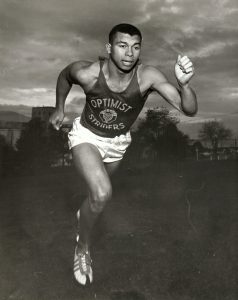 record times, and some Olympic and Commonwealth Games hardware. But he was also a coach and role model to many young athletes, including my buddy Jim at the Uplands Harriers Track Club in Ottawa. His coaching, mentoring and community building earned him an Order Of Canada medal as well. You can see a statue of him in Stanley Park in Vancouver, and his name adorns a few community building awards and facilities in Canada. The Jerome Classic is a major Canadian Track event. Because of his Jamaican heritage he is also revered both in Jamaica and in the Jamaican Canadian community.
So, it was this background that my buddy Jim set out to share a bit of what he knew, but largely what he had learned from Harry about sprinting. And it was during this process that Jim began to remember the second things that Harry would share after the actual sprinting tips. Let me explain.
Sprinting, unlike running longer distances has no room for error and each component contributes to a race that in the case of 100 meters, a common sprint length, occurs in a ten second time frame. So then as now, sprinters work on their PREP, START, STRIDE/ PACE relationship, BREATHING, and FINISH. What is also fundamental is something that at that time was recognized but glossed over and today makes up a big part of the prep – MENTAL CONDITIONING.
In Jim and Harry’s days it was the coach who would watch and comment, while today those insights are supplemented with detailed video footage showing critical points to work on but it all comes down to those components.
But when walking through Jims recollections of Harry’s thoughts on each of these elements, he began to say the things that Harry would also add after each specific tip, very much like a new parent saying to a child something that they have not heard since their parent said it them at the same age – often word for word. And as he related this to me on our phone call (Jim is in Toronto, Canada, and I am in Malta) he was crying. His emotions were not just because he was remembering this hero of his but also because it was only at that point that the real life messages Harry was delivering in his coaching were hitting home for Jim.
After talking about techniques for fine tuning the start, Harry for example would use the analogy of school being the big starting point for everything. Without that base, you are just trying to catch up, and probably can’t. On that critical relationship of stride and pace, after talking techniques and training to fine tune the relationship of the two in sprinting, Harry would generalize the actual physical stride with goal setting and objectives in life and pace with finding the right blend of work and play. On breathing (sprinting is a weird sport where each athlete will often know exactly a specific number of breaths over the race) he related it to general health, conditioning, diet, and self care.
But the part that struck Jim the most in this epiphany of Harry’s wisdom was on the Finish. Now the finish in sprinting is one of those items that we have all seen on the Olympic coverage where there is often a final lunge to the wire which can make or break a performance and while Harry would share tips on this, the significance again was on his life skills that was the second part of his chat. Harry’s notion was that for the race you have been given a little bit of real estate to cover. It is only for you. No one else is in your lane. No one is speeding you up or holding you back. You hear the gun go off and it is your race. So unlike tennis for example where you are competing with another player, this is a personal sport. You are only really competing with your personal best time. Someone else may hit that wire before you or behind you but they are on their own personal journey and you can respect them for their performance. Your achievement, at whatever level, is your own. And at that point he would usually relate this application of thought to the young athletes personal challenges outside of sprinting. Troubles at home, troubles at school … you may not be able to change some things, but you can change yourself. The mistakes of your parents or the circumstances of your life are for you to control. Your lane is your own.
Now at this point in the conversation my 72 year-old buddy is bawling his eyes out realizing if only he had spent more time listening to Harrys real purpose, in his analogy of sprinting to life, and not to just the sprinting tips, his own life would have been a smoother experience.
I have known Jim his whole life and he has always held Harry as one of the people who has shaped him. I know he was noticeably moved this week by the revelation of Harrys wisdom, but I think Harrys guidance has always been with him.
Django